

Before getting into the core newsletter, we wanted to flag this excellent new episode with Tim Sanders, Chief Innovation Officer of G2. The conversation spans strategic views of AI (like why executives only need to understand 30% of the tech) and tactics (like “shots on goal” plays every CMO should be embracing for AEO).
“The AI Answer” - Tim Sanders - G2
SPOTIFY | APPLE | OTHER PODCAST PLATFORMS| VIDEO
UPDATE: Can Superior NRR Offset Weak AI Gross Margins?
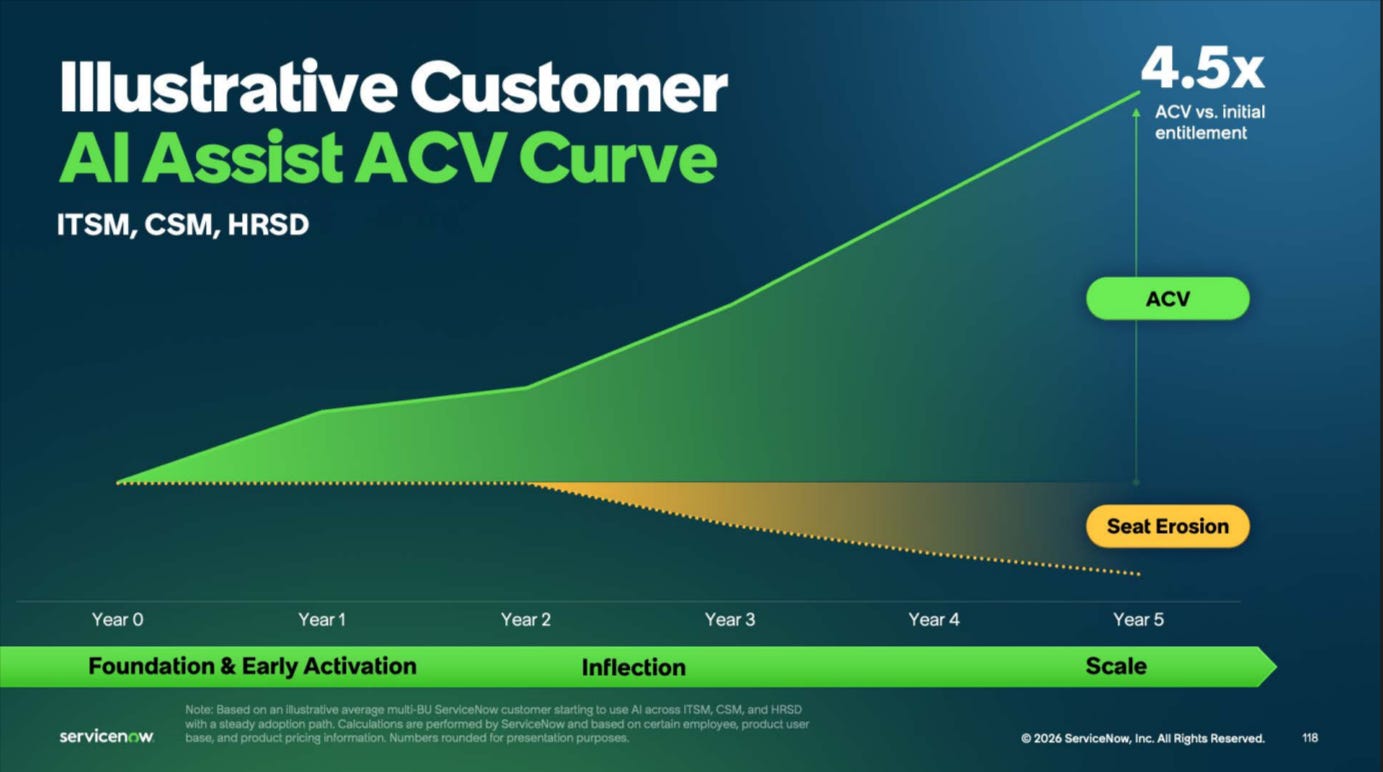
Amazing timing on this disclosure vs last Friday's newsletter:

The ServiceNow Investor Analyst Day from Monday included the above *AI* ACV Curve -> 4.5x implies 146% NRR.
Relative to *standard* SaaS LTVs, this implies AI LTV multiples that are:
at 40% AI GM = 1.7x v SaaS
at 50% AI GM = 2.2x
at 60% AI GM = 2.6x
at 70% AI GM = 3.0x
All of which is reflected in our modified “efficient frontier” for AI apps:
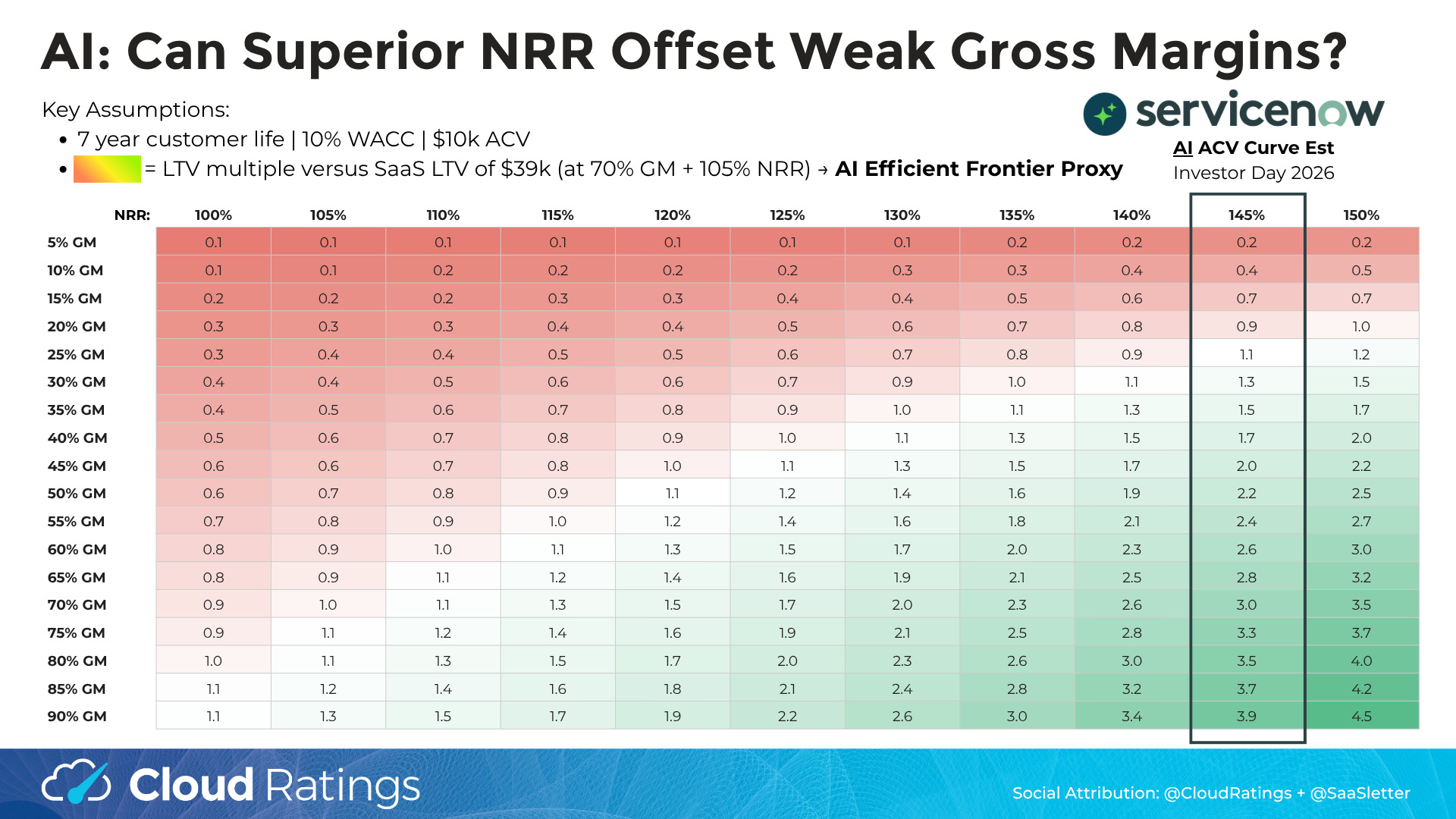
The key message: last week, we theorized about potential AI NRR curves, working from Tropic transaction data that is inherently short-term and less oriented toward enterprise orgs. With the caveat that this is an illustrative exhibit, this 146% implied AI NRR was put forward by a very sophisticated public company with a strong history of cohort unit economic disclosures.
“State of Martech in 2026”
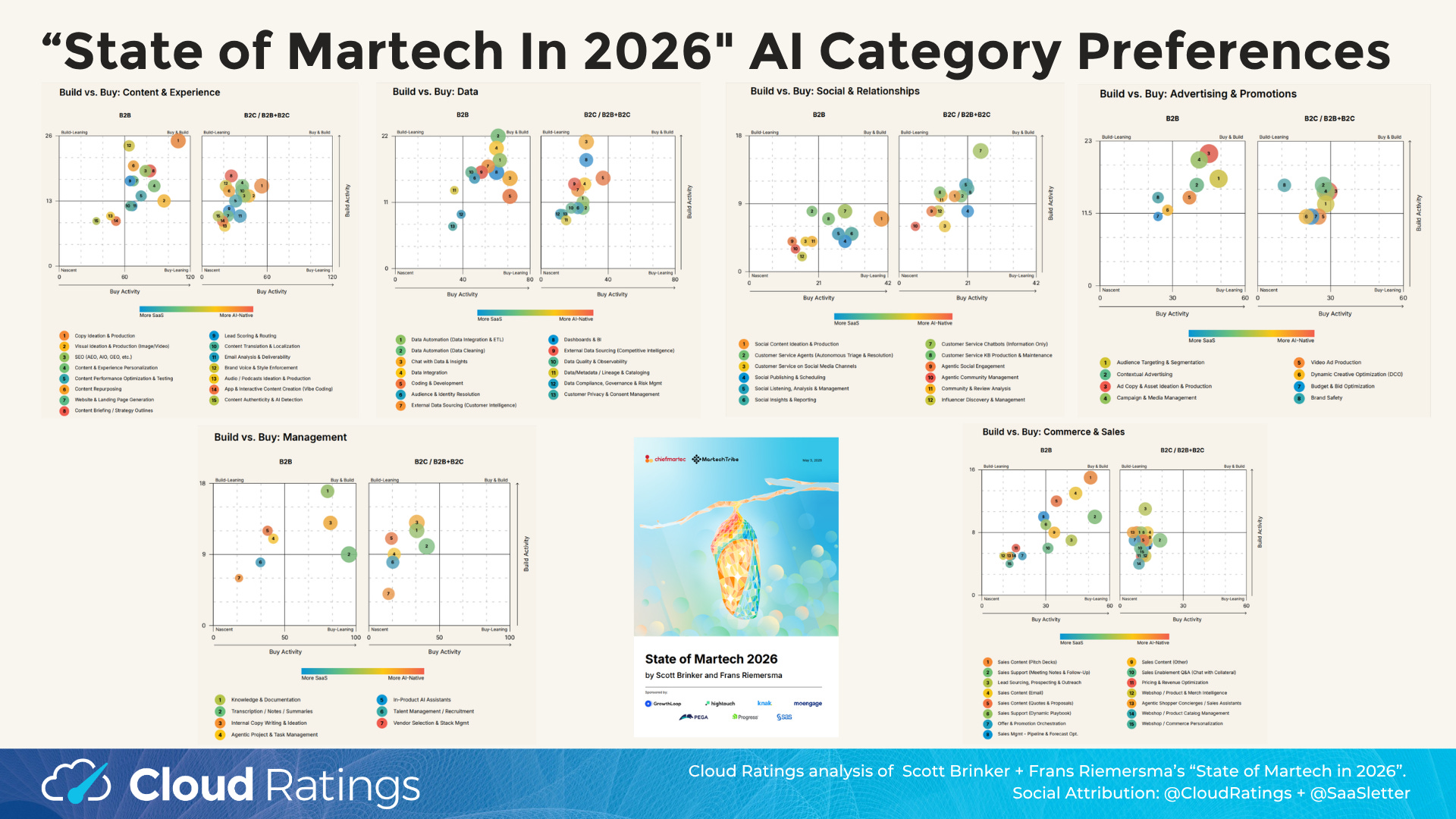
Scott Brinker and Frans Riemersma released their flagship, ever-popular “State of Martech in 2026” (125 pages).
To add value to their excellent AI adoption impulse coverage by category, we summarized the findings:
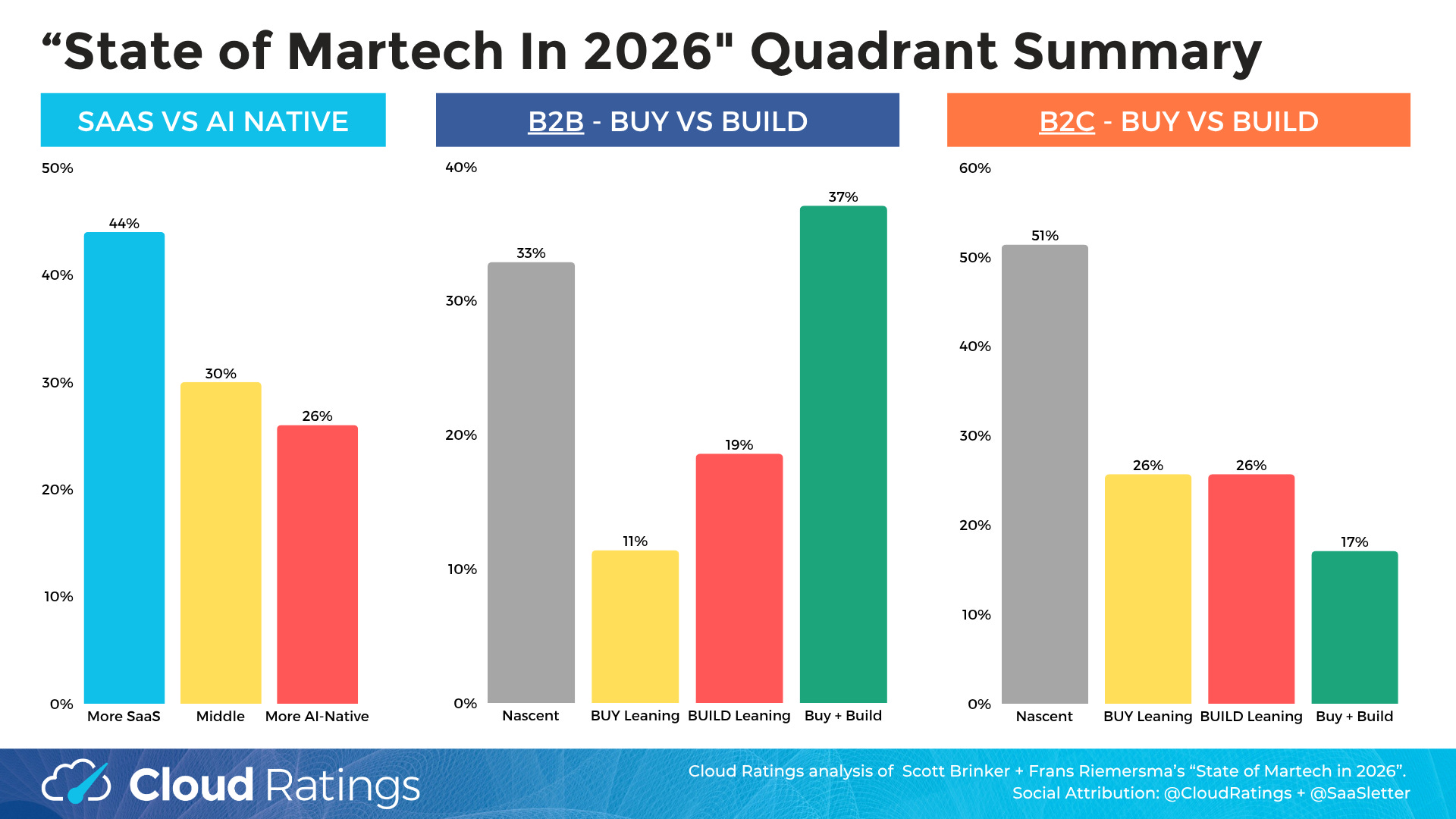
Key messages:
Preference For SaaS (44%) Over AI-Native (26%)
Effectively, “no one knows” and “we are still early” → “Nascent” has the greatest representation across B2B + B2C combined.
B2B is very “Buy AND Build” oriented (37%, #1 rank) → so a very strong demand sign
B2C is much more mixed between Buy and Build options, with “Nascent” the dominant view (51%, #1 rank)
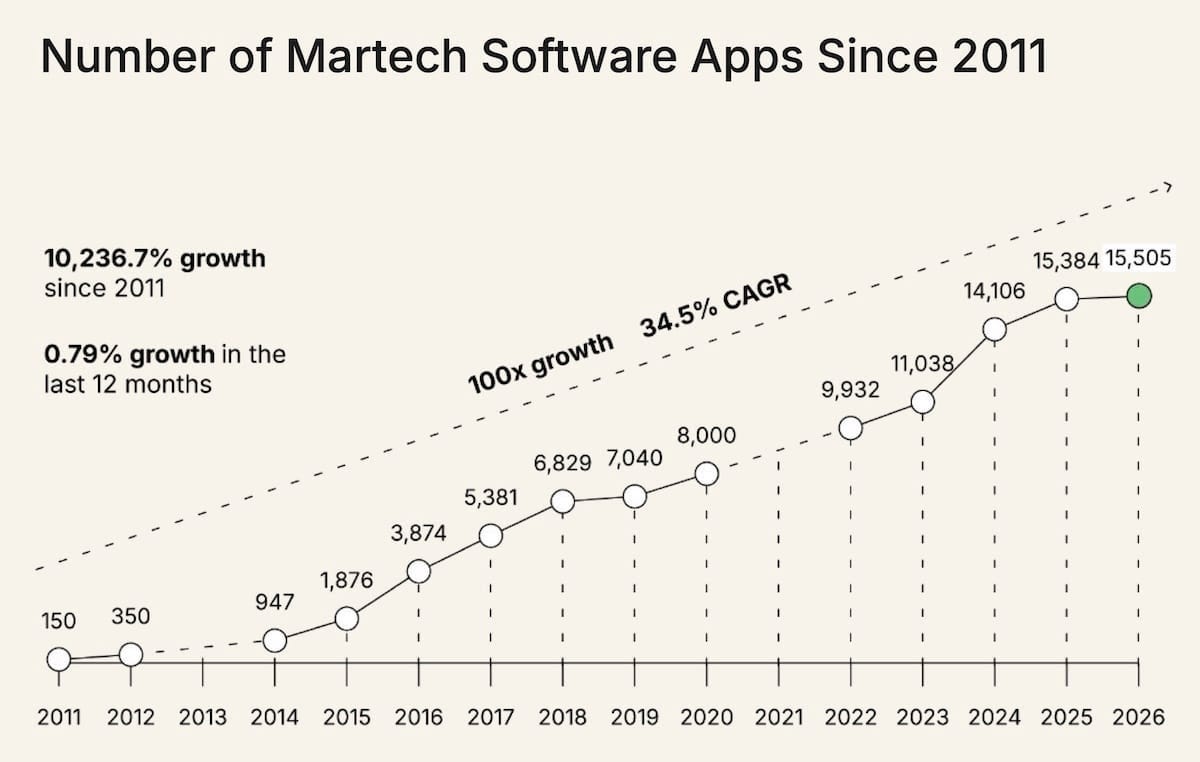
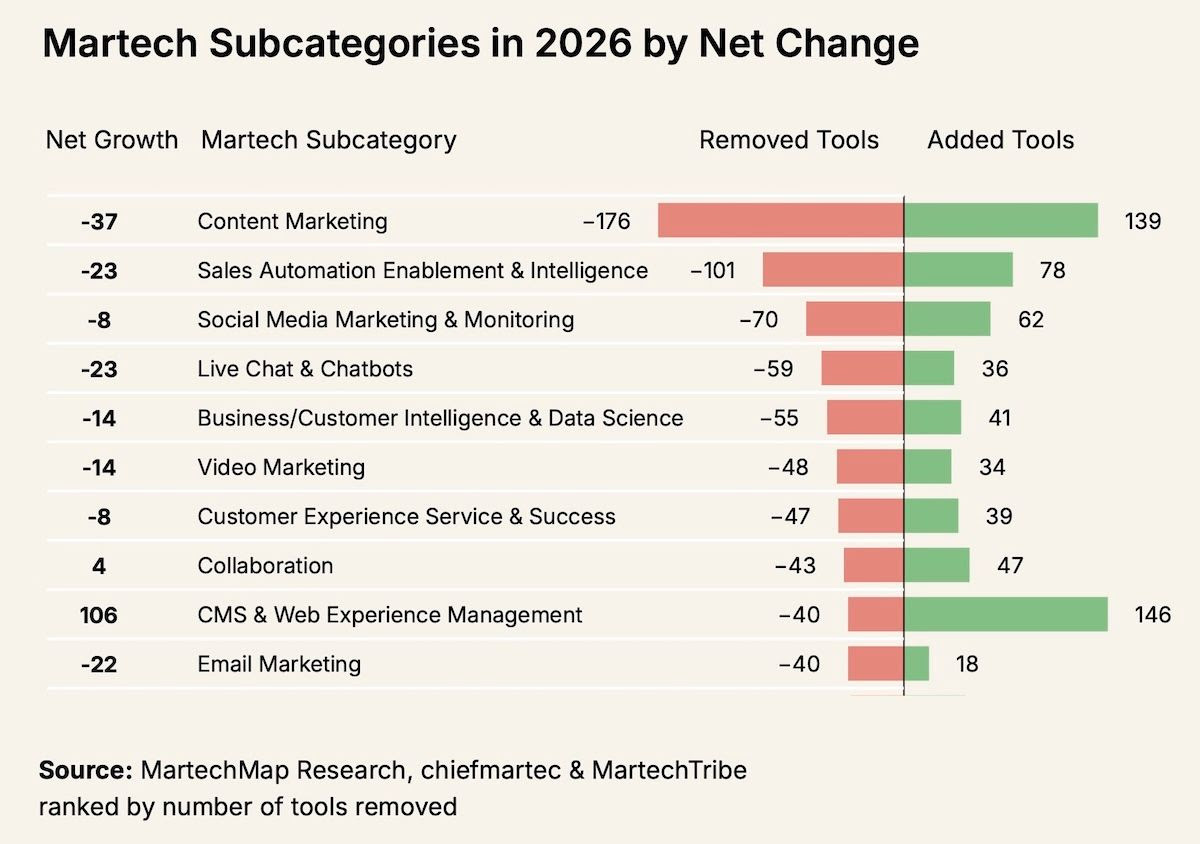
Scott + Frans’ report includes classics like the total martech app count (a very rare plateau… albeit at 15,505!) and new data on what is falling out of the stack:
UPDATE: Inference Is Eating the World
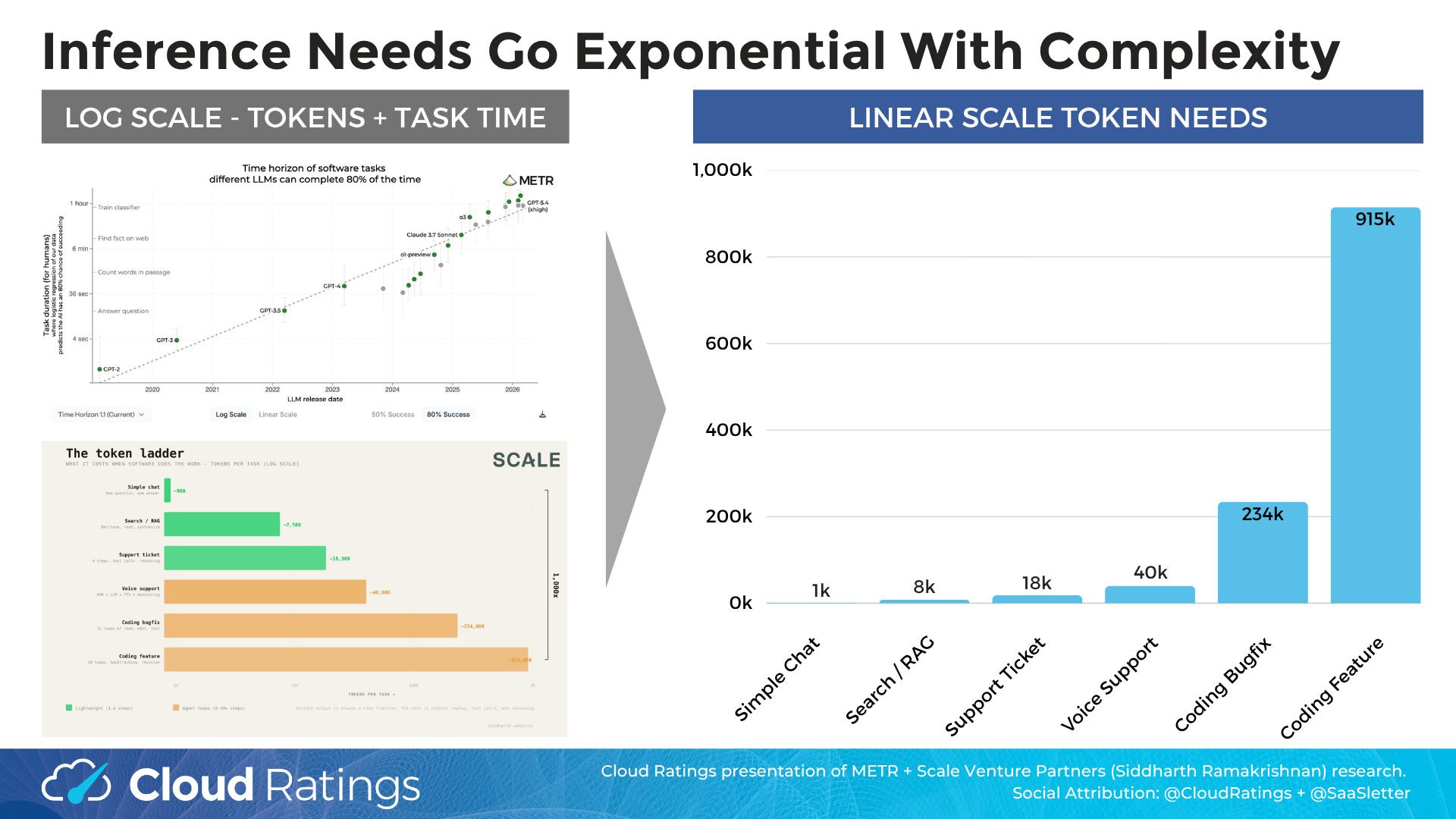
Last week, we covered “Software Is Eating the World (But Actually This Time)” from Siddharth Ramakrishnan of Scale Venture Partners. With our key emphasis on how inference demands go exponential with complexity:
This post from Charlie Zvibleman of AlphaSense, especially the “ auto Think Longer” note, gives a real-world example of the vertical token consumption ramp (up ~230% in 5 months for AlphaSense based on eyeballing the graph)


Dave Kellogg just published a note - “The Brute-Force Era of AI (and What Comes After)” - closely related to this inference explosion.
We hope to cover Dave’s “Brute-Force Era” in the future → in the interim, here are excerpts to get you to read the full post:
Constraint as a Driver of Efficiency
It is not coincidental that much of this efficiency work is emerging from environments where compute is constrained. When you cannot simply add more GPUs, you are forced to extract more value from the ones you have.
That dynamic has a long history in engineering. Systems built under constraint tend to be more efficient, more elegant, and more disciplined. Anyone who has written low-level code on constrained hardware has seen this firsthand. When you only have kilobytes of memory, you learn to think differently about how software is structured.
and:
We have seen this pattern repeatedly in other domains. Early cloud infrastructure was heavily overprovisioned before cost optimization became a discipline. Early web applications prioritized functionality over performance before latency and efficiency became central concerns. Early software systems accumulated features before being refactored into more coherent architectures.
About Cloud Ratings
In mid-2024, we announced a research partnership with G2 - more here:

with this slide showing how our G2-enhanced Quadrants (like our recent Sales Compensation Software) release, this business of software newsletter you are reading, our podcasts, and our True ROI practice area all fit within our modern analyst firm:

The most interesting part is how AI economics are starting to look completely different from traditional SaaS once usage and retention scale together