

As you might have noticed, we’re shipping less content during a product-building sprint at Cloud Ratings. Excited to be back for a moment here:
Hypergrowth AI Metrics - ICONIQ “State of Scaling 2026”
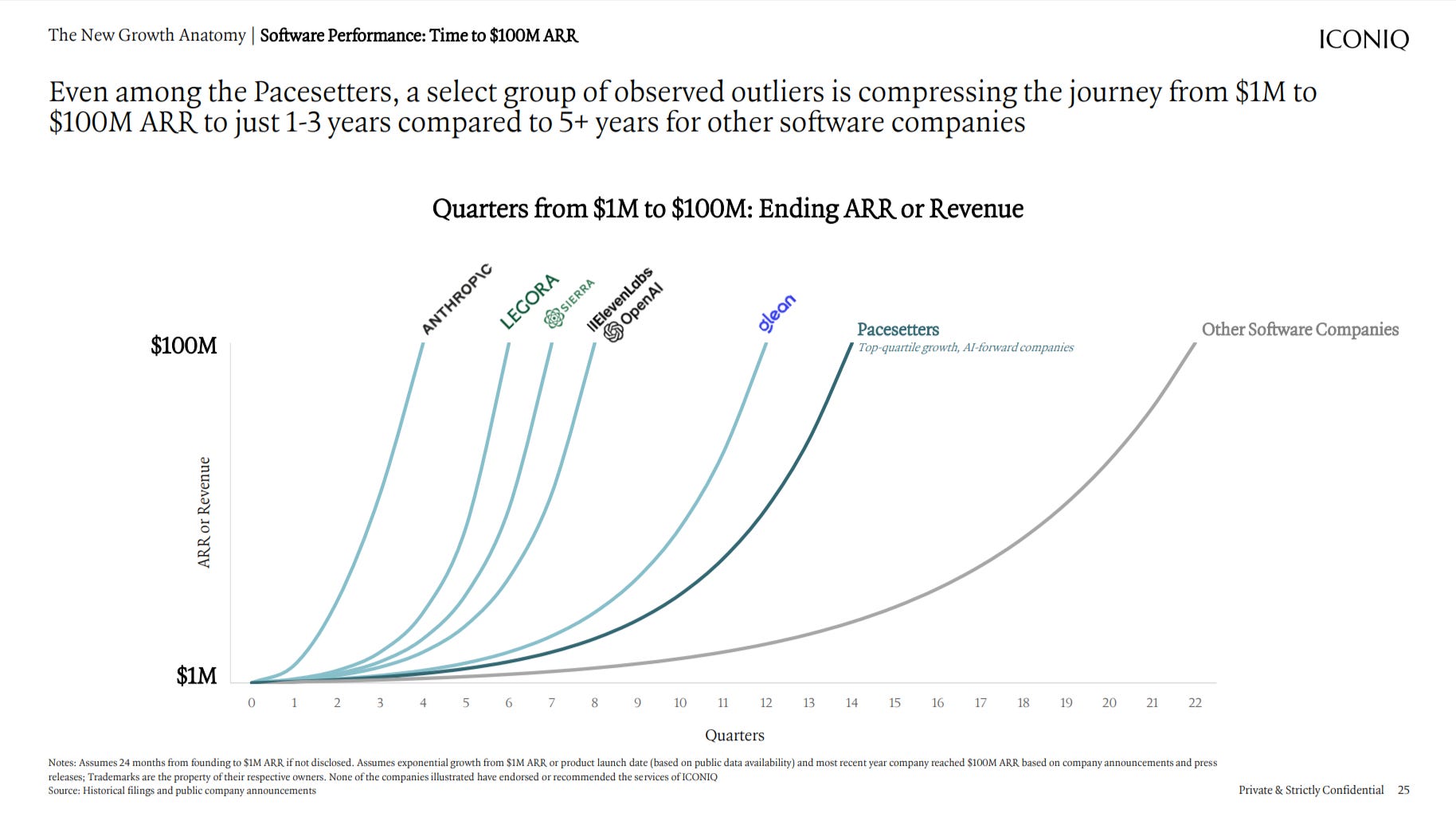
While the “quarters to $___ ARR” genre of slope charts are fun to look at, they are nearly always silent on underlying drivers + unit economics.
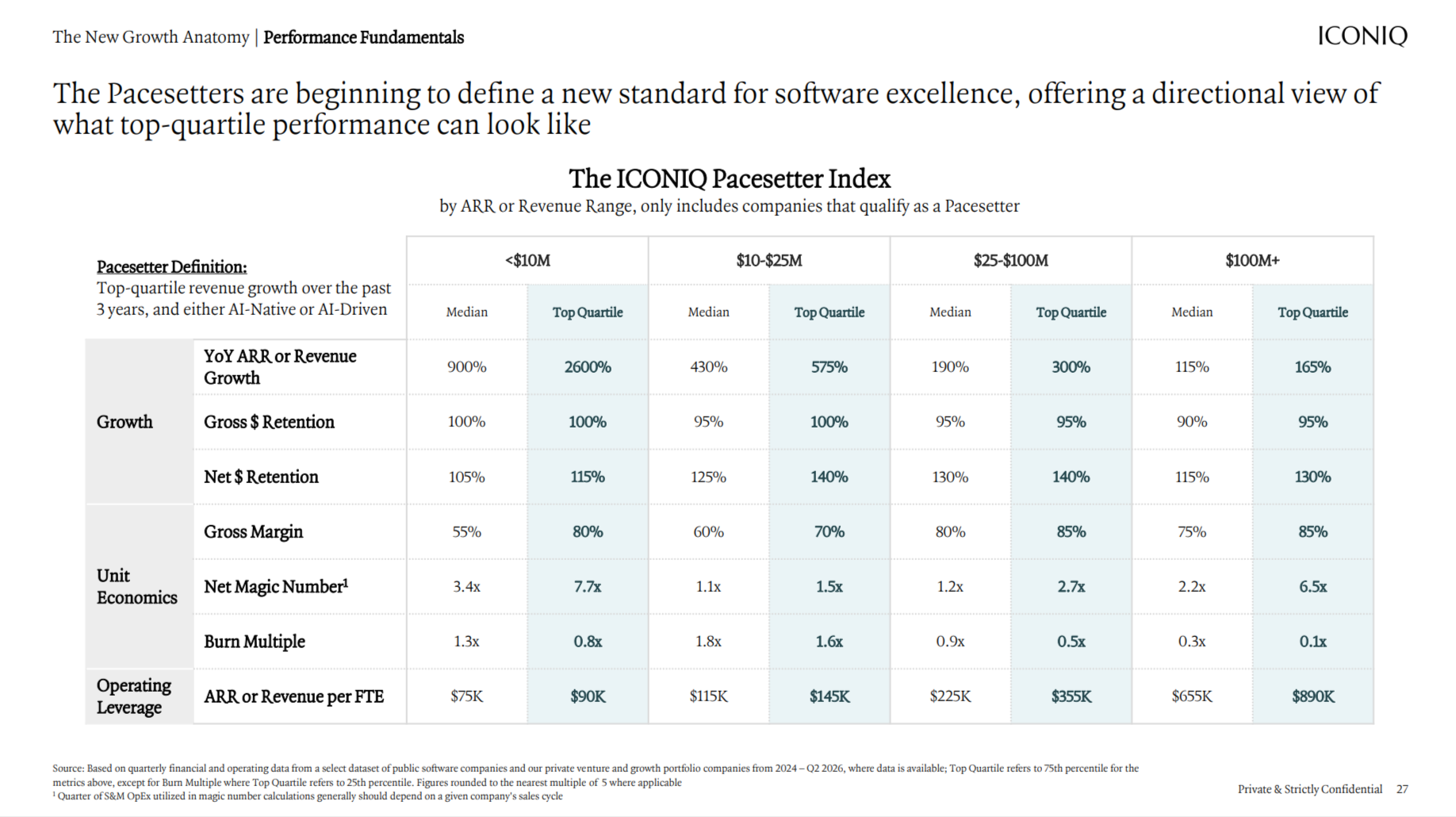
ICONIQ Capital (h/t Vivian Guo + co) released their “State of Scaling 2026” (52-slides here) with a key focus on hypergrowth AI companies (labeled as "Pacesetters”). With key Pacesetter metrics summarized here:
ICONIQ Report Positive Takeaways:
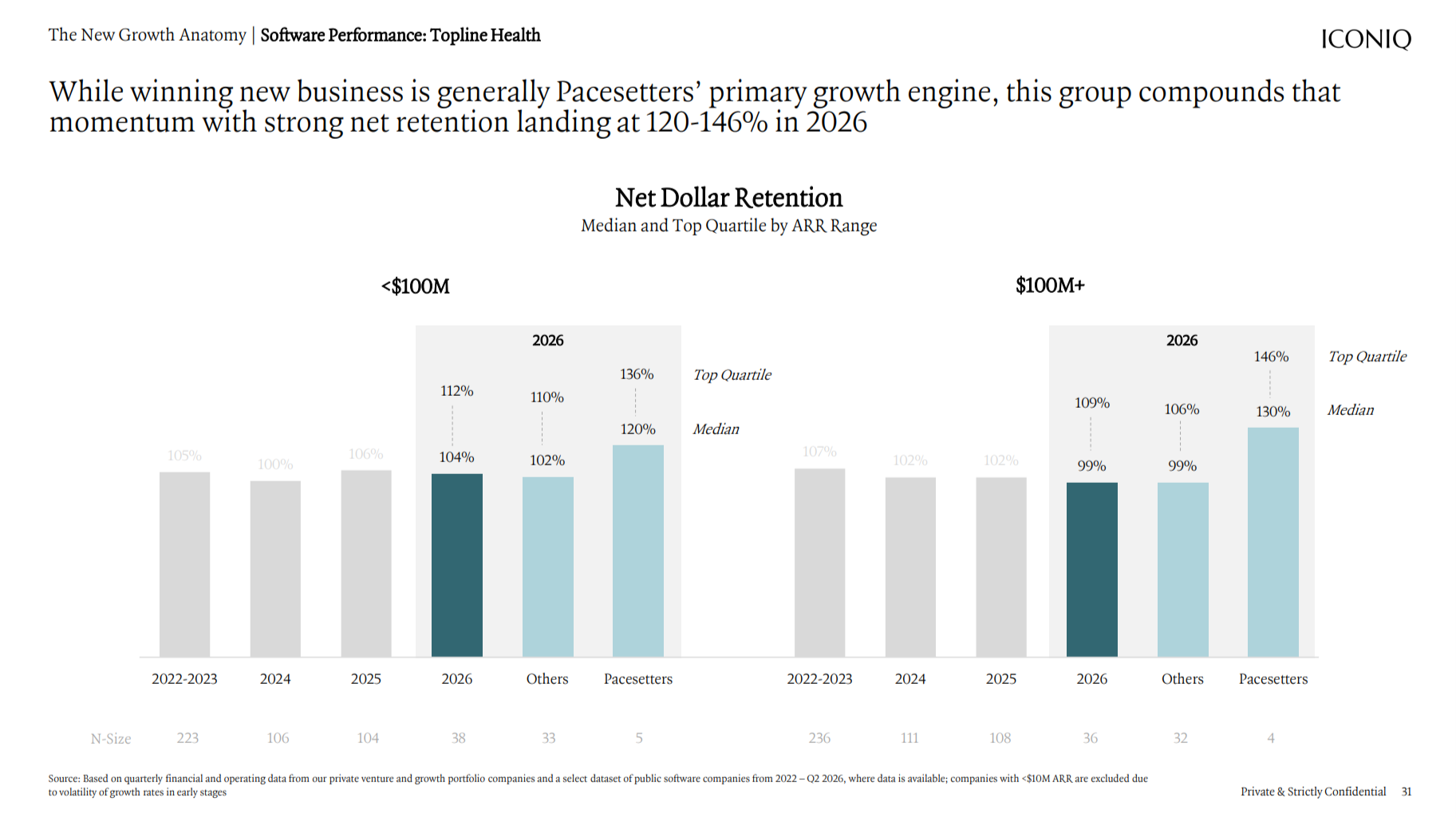
#1 Gross Margin: Pacesetter gross margins are broadly in line with traditional software. As we’ve covered repeatedly, AI gross margins are a critical watchpoint.
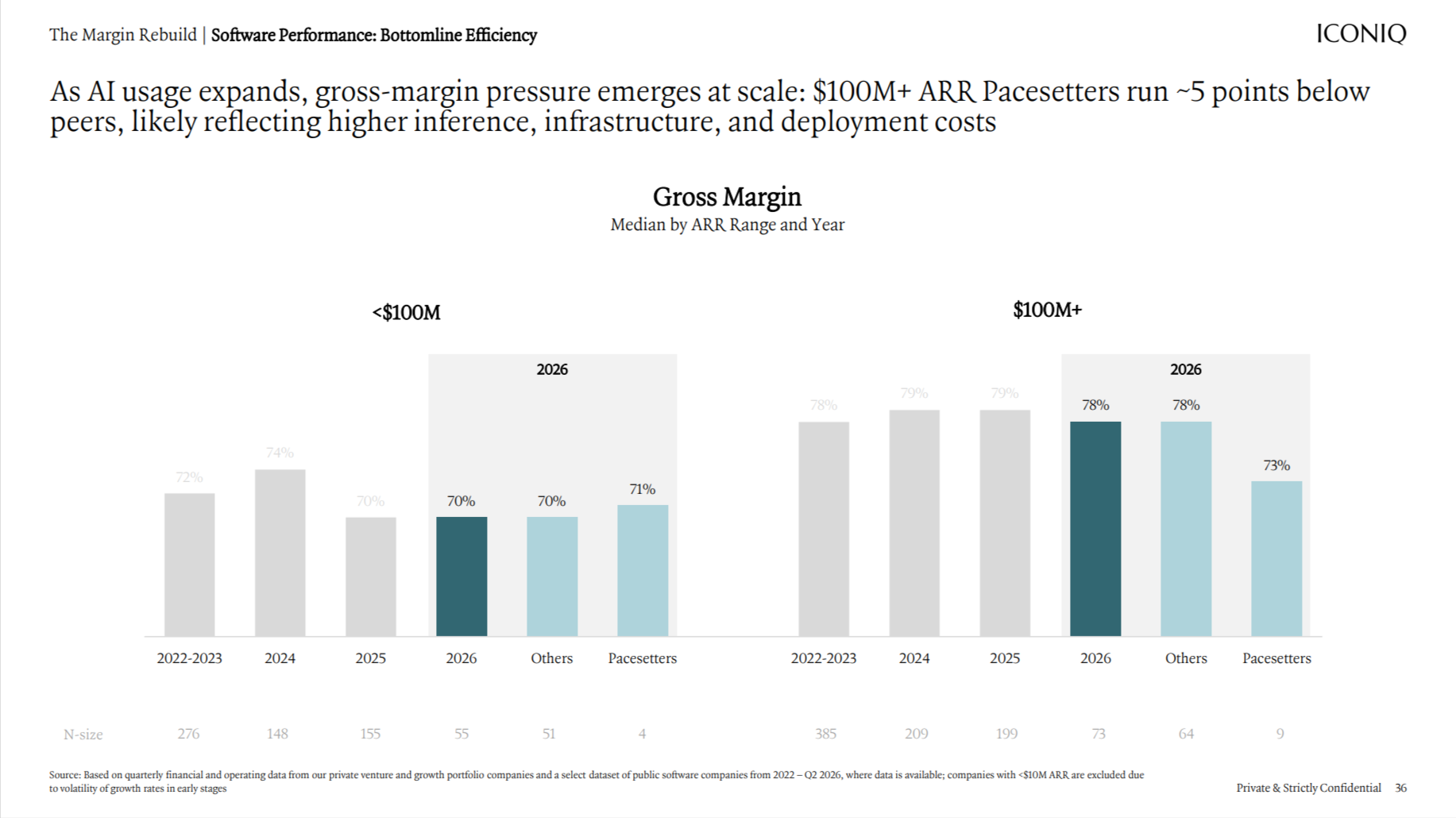
#2 Net Revenue Retention: Combining ICONIQ’s NRR data here:
… with our earlier ServiceNow-inspired AI NRR vs Gross Margin Lifetime Value matrix:

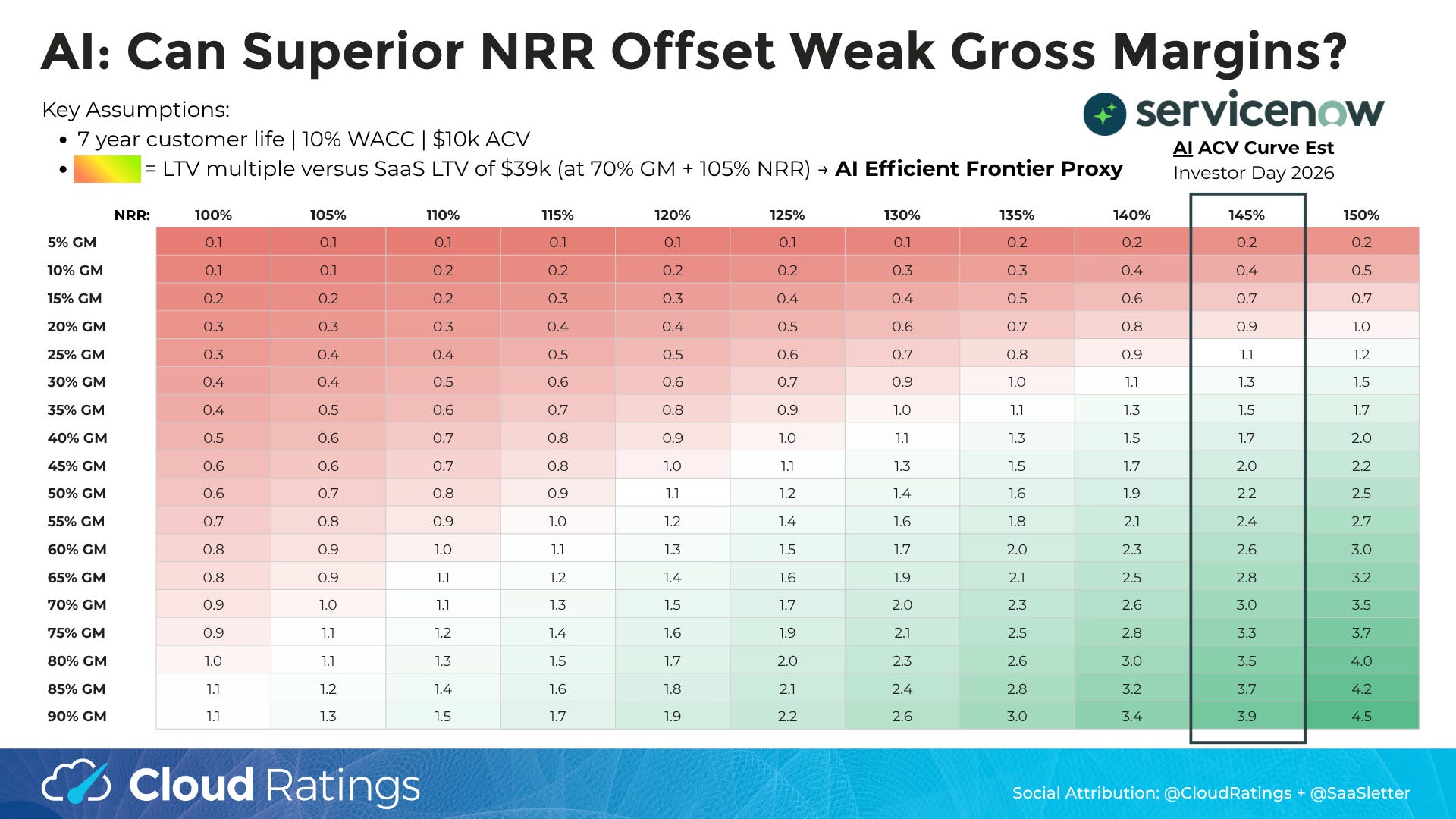
Roughly speaking, the ICONIQ Pacesetter’s customer lifetime multiple versus traditional SaaS works out to be:
<$100m ARR - Median NRR of 120% = ~50% higher LTV
<$100m ARR - TQ NRR of 136% = ~130% higher LTV
$100m+ ARR - Median NRR of 130% = ~105% higher LTV
$100m+ ARR - TQ NRR of 146% = ~210% higher LTV
In plain English, with gross margins coming in higher than feared and these eye-popping net revenue retention rates, Pacesetters' unit economics are exceptional.
ICONIQ Report Negative Takeaways:
#1 Shorter Contracts: “Short-term contracts are becoming the norm: 65% of Enterprise buyers prefer only signing contracts of 1-year or less”
#2 Pacesetter Gross Retention at $100m+: Perhaps a nitpick, but “only” 90% median gross retention is a watchpoint (at least relative to achieving durable, public company scale outcomes).
As always, go read the full report from ICONIQ.
Mapping AI Spend Data From Cledara, Ramp, Vertice + Zylo … With NEW Stripe Adoption Data
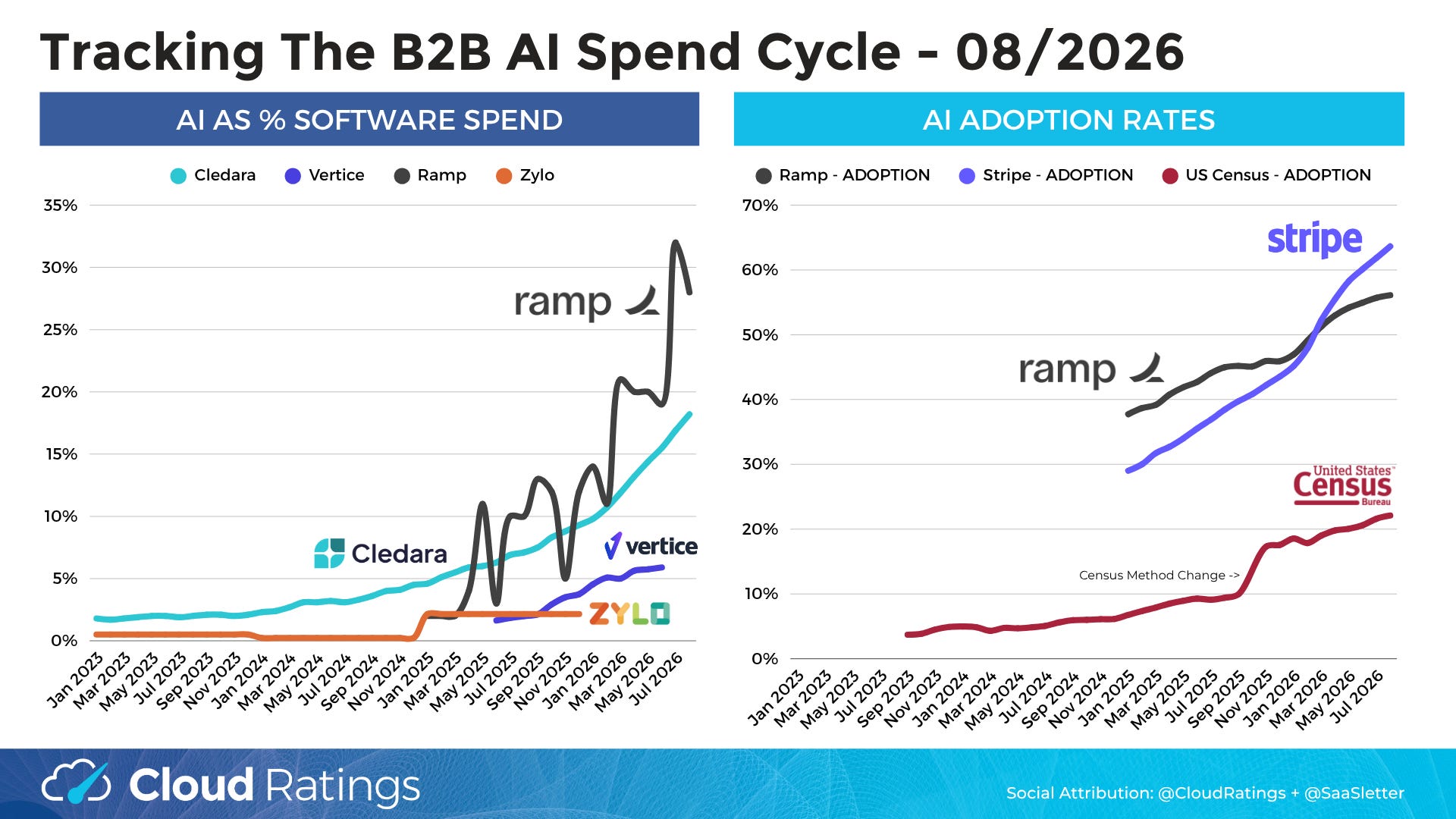
Our last edition debuted our B2B AI Spend Cycle tracker, aggregating disclosures from Cledara, Ramp, Vertice, and Zylo.
As we incorporated AI spend data through August, we chose to start showing adoption in our “all-in-one” thanks to Stripe (h/t Ernie Tedeschi + co), which disclosed AI adoption among Stripe customers.
The US Census Bureau’s inherently broad-based AI adoption tracking reinforces the need to understand the platform/respondent mix when interpreting these charts. See last edition’s graph:
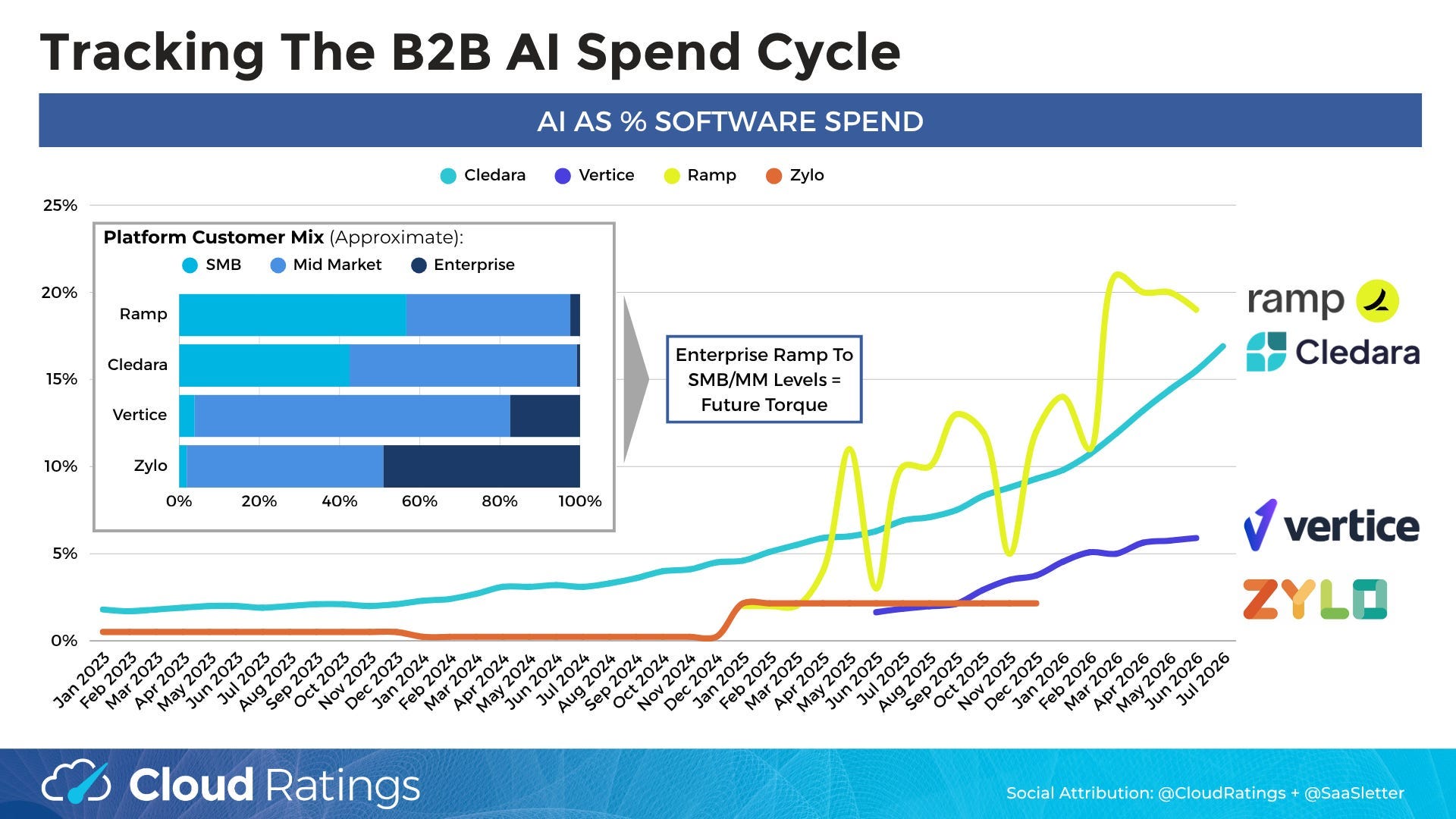
Regardless of the absolute levels + mix, the upward trendlines and slopes are generally consistent across all of these platform disclosures.
But Signs Of Caution In Our B2B AI Interest Index - AI Native Plateau
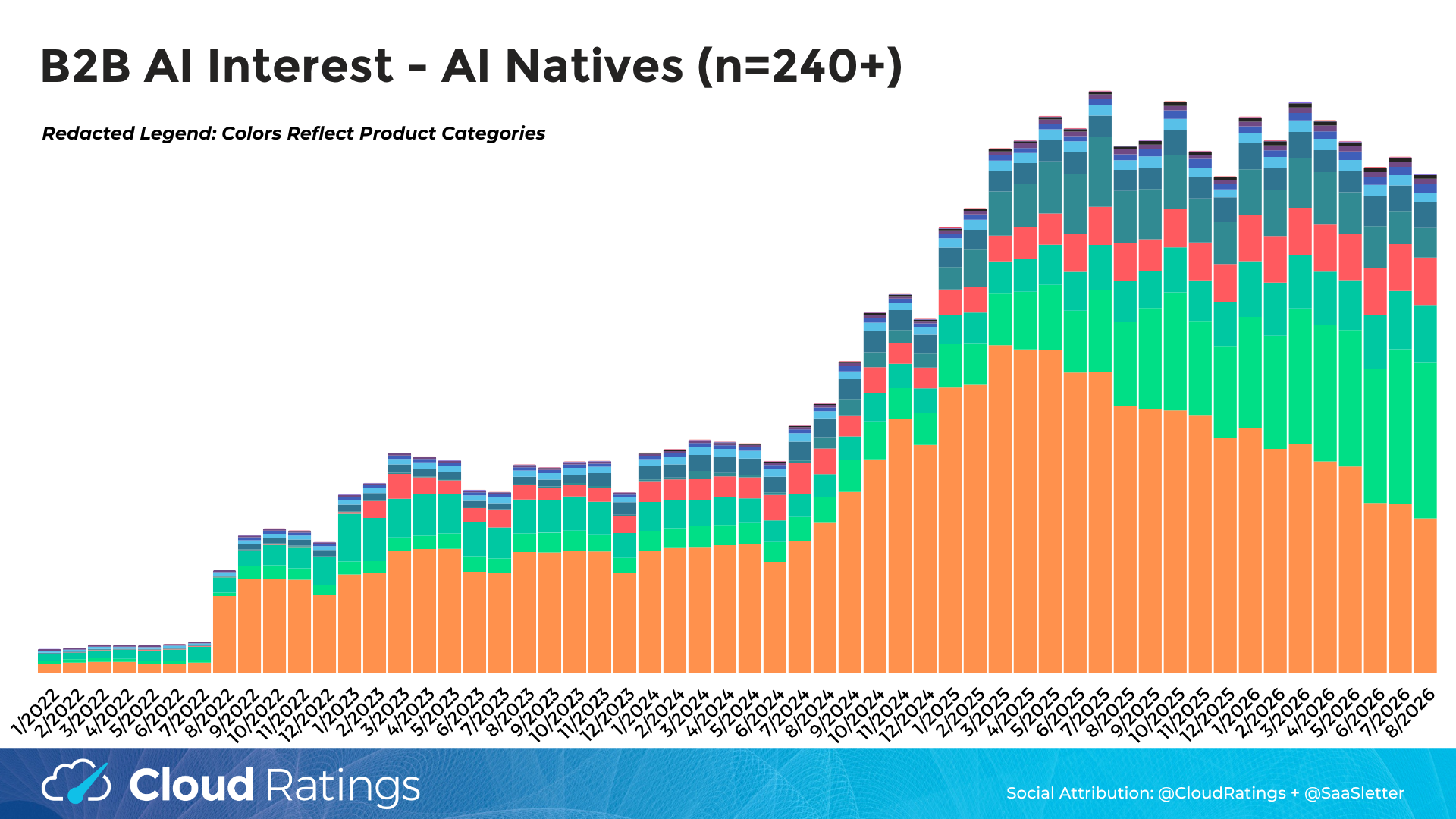
That said, a redacted excerpt showing a plateau from our expanded B2B AI-Native (n=240+) coverage universe warrants caution: this factor is forward-looking for future AI purchases/adoption.
As always, trends vary by category and company.
Curated Content
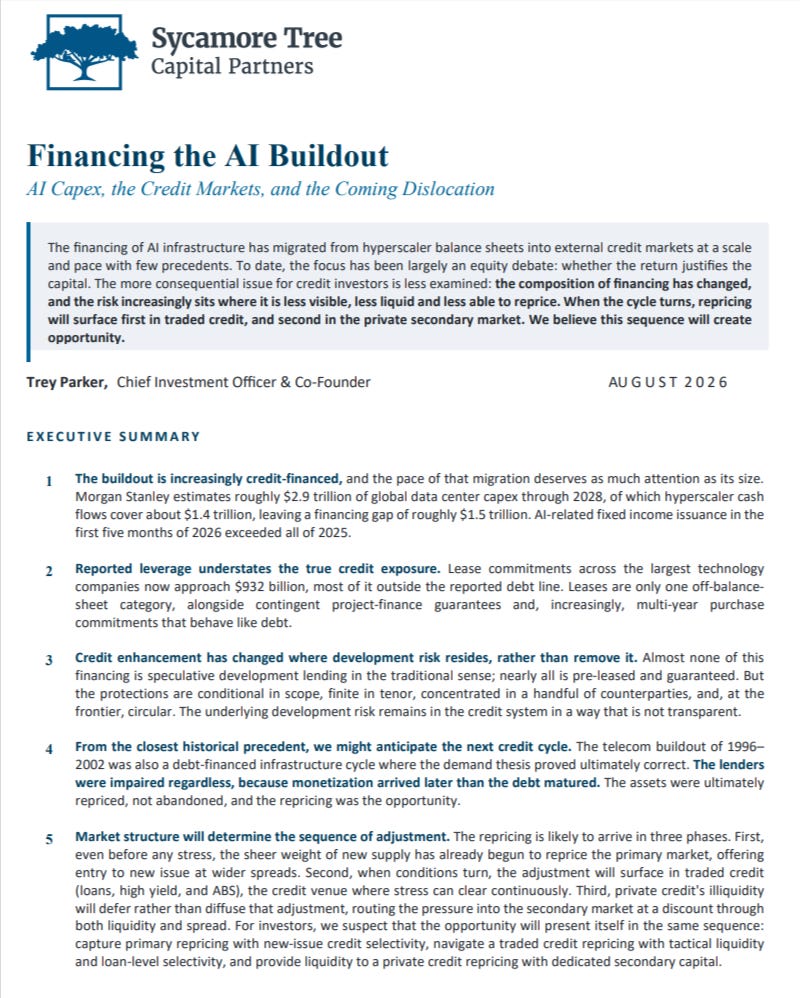
Credit markets are an increasingly key part of the AI economy → “Financing The AI Buildout” from credit investment firm Sycamore Tree Capital Partners (h/t Trey Parker + Christian Yonkoski) provides a great holistic view of AI x Credit.
“AI (In)Security” from Sapphire Ventures (h/t Kevin Burke) provides a digestible recap of AI x cybersecurity issues + themes in 2026.
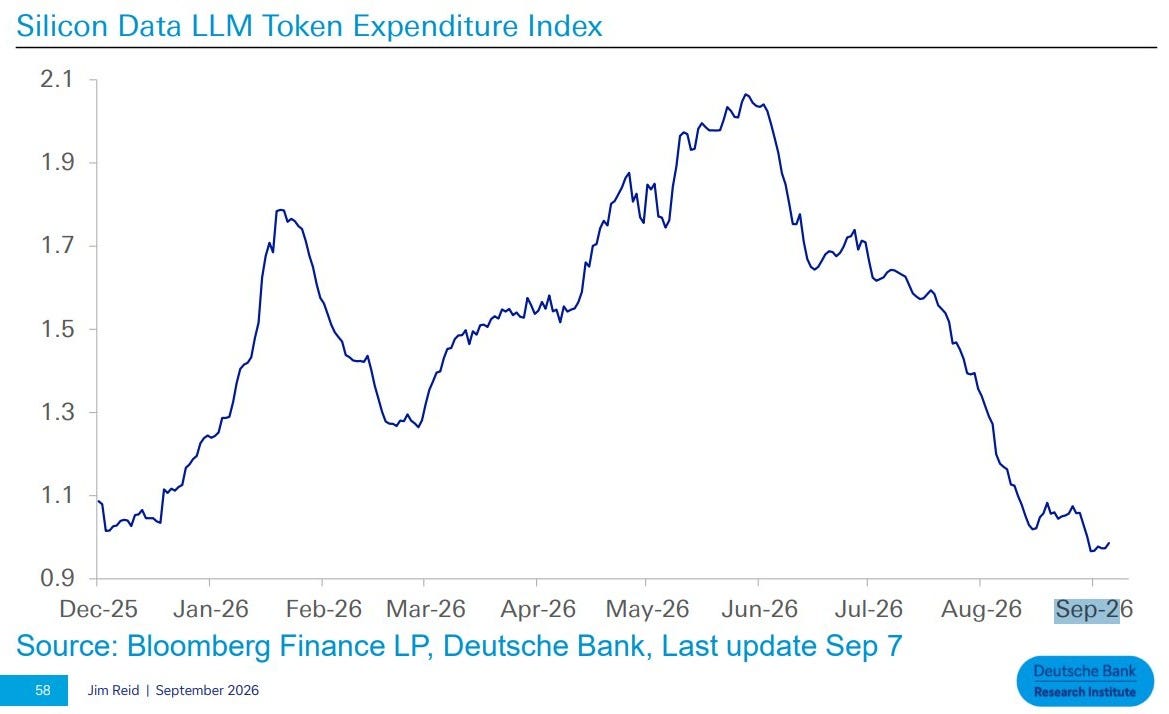
Like the “Economist magazine cover as a contra-indicator”… the Silicon Data Token Index has declined materially since our July 23rd coverage:
Edward Robson (CIO - 2717 Partners) On “Cloud Returns” Investing Podcast
SPOTIFY | APPLE | OTHER PODCAST PLATFORMS| VIDEO
We recently released this episode with Edward Robson, Partner + Chief Investment Officer of 2717 Partners. The episode outlines his frameworks for capital allocation in technology and the related impact of AI.
About Cloud Ratings
In mid-2024, we announced a research partnership with G2 - more here:

with this slide showing how our G2-enhanced Quadrants (like our recent Sales Compensation Software) release, this business of software newsletter you are reading, our podcasts, and our True ROI practice area all fit within our modern analyst firm:
